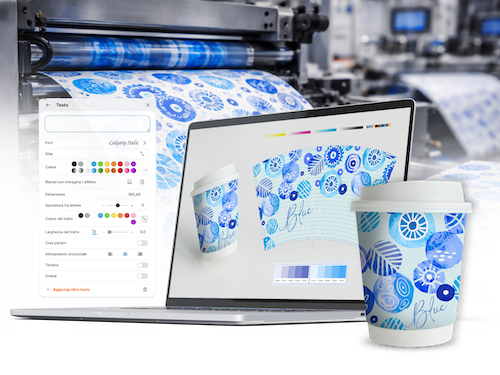
According to Zakeke, the fastest-growing segment in packaging printing isn’t a material, it’s personalisation. Demand for customised packaging is accelerating and the competitive edge now belongs to printers who can deliver it without slowing down.
Something has shifted in how brands think about packaging. Personalisation, once treated as a premium add-on reserved for special campaigns, is becoming a baseline expectation. Consumers want products that feel made for them. Brands want packaging that tells a unique story on the shelf. Printers caught in the middle are facing a simple but urgent question: can we deliver customisation at speed, without adding complexity to our workflow?
The Personalisation Wave Is Not Slowing Down
The numbers tell a clear story. According to a 2026 analysis by Packaging Dive, 55% of brands now cite cost-effective short runs as a key reason they are investing in digital printing, while 53% point to speed to market. Behind both of those figures is the same underlying driver: brands need personalised, localised, campaign-specific packaging, and they need it fast.
Variable Data Printing already accounts for 40 to 50% of short-run label jobs. But the shift goes well beyond labels. From custom gift packaging and promotional items to region-specific product runs, the demand for unique, short-run packaging is expanding across categories. A recent industry outlook by PI World identifies shorter runs and quicker lead times as one of the defining trends of 2026.
The Bottleneck Is Not The Press. It Is The Process Before It
Most printers today can technically produce personalised packaging. The technology is there. Usually, the real friction in implementing packaging personalisation is in the prepress workflow.
A customer sends a design by email. The printer opens it in Photoshop, adjusts it, exports a proof, sends it back, waits for feedback, makes corrections, and exports again. Multiply that by dozens or hundreds of orders per week, and personalisation becomes a time sink that erodes margins rather than building them.
This is the gap that separates printers who offer personalisation from printers who profit from it. The ones who win are those who have removed the manual steps entirely, replacing the email-proof-revise cycle with automated tools that let customers configure their own designs online and generate print-ready files instantly.
Web-to-print platforms have matured significantly in this area. The best ones now allow end customers to personalise products directly on a brand’s website, with live previews, template guardrails, and automatic output of production-ready artwork in formats like PDF, SVG, or PNG, with CMYK and Pantone specifications already embedded. The printer receives a file that goes straight to production with no back-and-forth, and no guesswork.
Sustainability Follows Naturally
There is a sustainability argument here too, and it matters for Southern African printers as international brands bring their procurement standards into the region. On-demand personalised production means printing exactly what is needed, when it is needed. There is no overproduction and no warehoused packaging that becomes obsolete after a campaign ends. Plants adopting digital printing report 30 to 60% less make-ready waste on short jobs compared to traditional methods. When personalisation and sustainability align, the business case becomes very hard to ignore.
Making Personalisation Fast, Not Complicated
The opportunity for commercial printers is real, but it depends on execution. Personalisation only works as a growth strategy if it does not slow the business down. That means investing in tools that automate the design-to-production path, that put the customer in control of their own customisation, and that deliver print-ready output without manual intervention.
The printers who will define the next era of packaging are not necessarily the ones with the biggest presses or the longest client lists. They are the ones who figured out that personalisation is a workflow problem, not a technology problem, and solved it before their competitors did. The demand is already here. The only variable left is speed of adoption.
ZAKEKE
www.zakeke.com