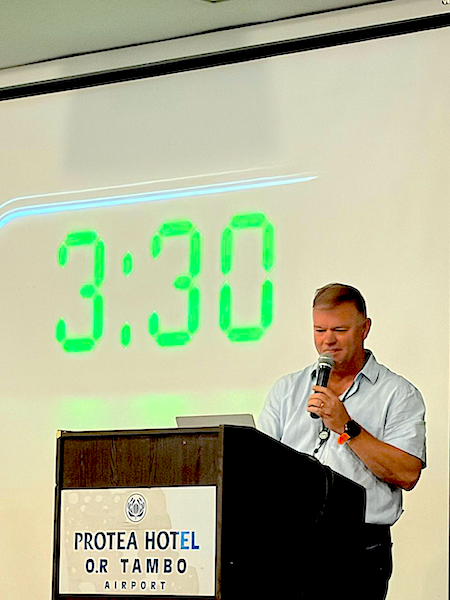
Stuart Baylis, Group Operations Manager at Polyflex Premedia, outlines the operational realities behind packaging print approvals, focusing on the role of brand managers, the technical variables that influence print outcomes and the coordination required between brand owners, premedia specialists and printers to ensure consistent results.
There is a high-pressure environment surrounding press approvals, which often involves early travel, tight schedules and significant production costs. The moment of sign-off represents the final checkpoint before packaging enters full production. At that stage, multiple stakeholders converge, including sales, production and brand teams, to determine whether a print run proceeds or whether issues around colour, quality or compliance require intervention. The decision ultimately balances brand expectations against manufacturing realities. That press approval moment is the last point where a brand decision can prevent an expensive production mistake.
Within this process, brand managers act as custodians and gatekeepers of brand integrity. The press approval stage is the final opportunity to stop problems before packaging reaches the market. Beyond aesthetic considerations such as colour accuracy and shelf impact, approvals must confirm critical elements including regulatory text, claims, logos and barcode functionality. Successful sign-off also reinforces internal confidence among stakeholders as a product launch moves forward. The brand manager is the final gatekeeper before packaging reaches the shelf.
Preparation before arriving at press is essential. Brand owners should bring clear brand guidelines, final approved artwork PDFs, defined colour targets and reference standards. While Pantone is often criticised, it still provides a consistent baseline for colour comparison. Where possible, spectral colour data and spectrometer readings offer greater accuracy, though these tools remain costly for some operations.
Extended Colour Gamut (ECG) samples and approved ‘golden samples’ are also important benchmarks, but these must be shared with the premedia supplier before production begins to ensure contract proofs reflect the intended reference. If the premedia team doesn’t understand your colour intent, the press will never match what you expected.
Authority to approve or reject a print run is another operational requirement. Delays frequently occur when brand managers must seek remote approvals from multiple departments during a press check. This can halt presses worth tens of millions of rand and disrupt production schedules. A clearly defined go/no-go authority structure allows decisions to be made efficiently while production equipment is idle. A printing press standing still while approvals are chased is one of the most expensive delays in packaging production.
Once on press, brand managers should focus on specific technical checks rather than general visual impressions. These include verifying brand colours against proof standards, ensuring food imagery appears vibrant and accurate, and confirming that skin tones in human imagery reproduce correctly. This is often one of the most challenging elements in print. Consistency must also be evaluated across different repeats, packaging variants and product ranges running on the same press. Press checks are not about opinions, they are about verifying measurable print standards.
Attention to detail extends to functional packaging elements. Small text must remain legible despite dense regulatory requirements, while claims, legal content and barcode placement must be verified. Barcode verification scores are particularly important, as poor print quality can prevent products from scanning at retail checkout and creating downstream supply chain issues. If the barcode doesn’t scan, the product doesn’t sell.
Material selection further complicates colour accuracy. Different substrates, including gloss, matt and transparent materials, produce varied visual results even when the same inks are used. Contract proofs may simulate substrate characteristics, but exact matches are difficult when printing on matt surfaces or specialised materials. In flexible packaging, white ink opacity also affects final colour appearance, and performance varies significantly between UV, solvent-based and water-based white inks. The same ink can look completely different depending on the material it’s printed on.
Lamination processes introduce additional visual changes. Lamination typically deepens colours and increases gloss, meaning printed material may appear slightly duller before finishing. Printers often simulate this effect during press checks to give brand managers an indication of the final packaged appearance. What you see on press is not always what the finished pack will look like after lamination.
Manufacturing tolerances must also be understood. While some presses can maintain tight registration tolerances of 0.1mm, others operate closer to 0.3-0.4mm depending on equipment capability and substrate stability. Materials themselves may stretch or shift during production, requiring premedia adjustments such as traps and spreads to prevent misregistration and visible white lines between colours. Print is a mechanical process, and every press has limits that need to be respected.
Other technical factors include dot gain, where printed dots expand during the printing process, altering colour density over long print runs. Printers compensate by periodically checking sheets during production and adjusting ink densities to maintain consistency across the run. Over a long print run, the press is constantly being adjusted to keep colour consistent.
Successful press approvals depend on the mindset of the participants. Rather than approaching press checks competitively or defensively, brand owners and printers should focus on collaboration, clarity around priorities and an understanding that some decisions must be made with incomplete information. In many cases, the choice is not between perfect and imperfect packaging, but between acceptable manufacturing outcomes and unrealistic expectations. Press approvals work best when everyone focuses on solving the problem, not winning the argument.
Beyond the press itself, there is the complexity of premedia preparation that occurs before brand managers receive the first proof. Premedia teams must confirm that supplied artwork is the latest version, define the intended colour targets and clarify reference standards. Without clear colour intent, whether matching an overseas sample, an existing pack or a defined colour standard, accurate colour separation becomes impossible. If colour intent isn’t clearly defined at the start, the entire process becomes guesswork.
Additional premedia considerations include retouching decisions, such as enhancing imagery for better print performance, simplifying colour separations to make printing more stable and confirming whether artwork is structured in layers or product ranges using common plates. Some brands also require new packaging to match legacy designs that were produced using outdated printing standards, further complicating reproduction. Sometimes the hardest job is trying to reproduce a design that was never technically correct in the first place.
Colour separation decisions are also influenced by press capabilities. Different printers operate with varying numbers of colours, meaning artwork sometimes needs to be reconfigured if a job moves to a press with fewer ink stations. Similarly, agencies often supply artwork with generic white or varnish layers that require technical interpretation before production. Artwork has to be designed with the press in mind, not just the screen.
Printing problems rarely stem from a single failure point. Instead, they usually emerge from the interaction of process variables, including chemistry, physics, substrate behaviour and design decisions. Successful packaging production therefore depends on coordinated choices across the entire workflow, from artwork preparation and colour separation to press operation and final approval. When a print job goes wrong, it’s rarely one mistake, it’s usually a chain of small decisions.
POLYFLEX PREMEDIA
https://polyflex.co.za/