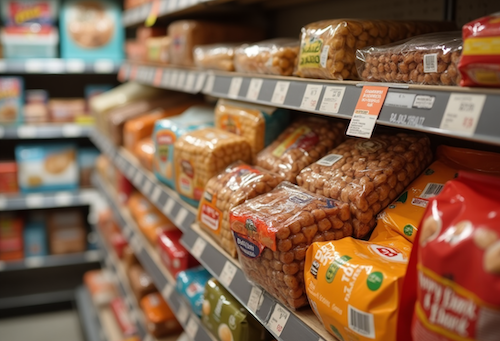
According to Focus Label Machinery, flexible packaging is becoming a popular alternative in recent years. Made from materials such as film, foil, or paper, flexible packaging offers important advantages: considerably less material is required compared to rigid packaging, such as bottles or containers; weight-to-cost and weight-to-resource ratios are superior to other forms of packaging; and flexible packaging can be printed more quickly, boosting productivity.
Flexible packaging, therefore, is highly efficient, creates low waste, and offers exceptional cost-effectiveness. But is there a catch?
The Challenge Of Printing
Flexographic printing can deliver high resolution and fantastic graphics on flexible packaging, which is particularly important for the food industry. However, the process of flexo printing must be managed differently compared to printing on paper and board substrates because of some unique challenges:
Ink
When printing flexible packaging, the inks must be compatible with the substrate, as some materials tolerate heat more effectively than others, while some absorb ink more readily.
The chosen ink must be adjusted in line with the qualities of the substrate, particularly considering the pH level of the ink: different substrates require specific pH levels so that the ink adheres to the material rather than drying too quickly or slowly. Some plastics will need to be treated (Corona) before printing to improve quality and ink adhesion to the substrate. For best results Corona treat on-line while printing.
Also, the viscosity of the ink must be carefully set, as incorrect levels will lead to inconsistencies such as foaming, smears, fisheyes, halos, or uneven colours.
Food safety is an important factor to consider: inks need to be low migration and certified for food use. Talk to your ink supplier about the specific application.
Printing Plates
During the printing process, flexible substrates are prone to movement. The different thicknesses of these materials can affect the quality of the print.
To combat the problem, the tension on the printing machines must be checked before each print run, and printing plates must be maintained to prevent uneven inking, inconsistent print, image bleeding, or dirty prints.
Contamination
The constant operation of machinery in the printing process can generate static electricity, which encourages dust and other contaminants to gather on the substrate. With flexible packaging such as film, particles will adhere more readily, affecting the quality of the printing process. So consider investing in web cleaners and anti-static bars through the printing press.
FOCUS LABEL MACHINERY
https://www.focuslabel.com