According to Focus Label Machinery, the shift to digitalisation is not necessarily replacing established production methods, but is allowing businesses to better adapt to shifts in workload patterns and customer expectations that have been building for some time.
Digital capacity in label printing is often discussed in terms of innovation or transformation, or even ‘disruption’. On the shop floor, however, the growing importance of digital inkjet and hybrid technology appears to be less dramatic and more incremental.
Across the sector, many converters are managing increased job variation, making digital capacity a competitive differentiator in some label printing markets. SKU counts continue to expand, regional versions are more common, and promotional cycles are shorter. These developments do not necessarily eliminate longer-run work, but they do introduce a higher proportion of smaller, more frequent jobs into the production mix.
In this context, digital inkjet and hybrid technology offers businesses greater practical flexibility. The ability to produce short runs without plates, incorporate variable data inline, and transition between jobs with less disruption can help reduce friction in day-to-day operations. For some businesses, this flexible digital capacity has become a useful complement to established flexographic processes, while for others it is displaced flexographic methods altogether.
It is important, however, not to assume that digital capacity automatically confers a market advantage. Flexo remains highly efficient for repeat, volume-based work. Many converters continue to rely on it successfully, and in certain segments it remains the most appropriate technology choice.
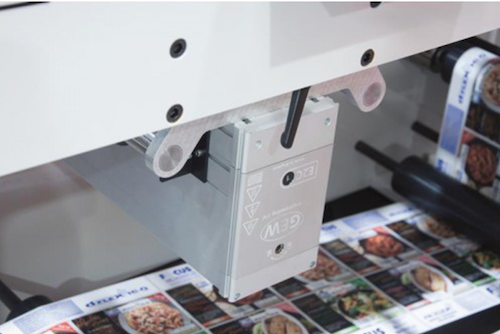
Where digital begins to influence competitiveness is in the management of variability. As job profiles become more fragmented, non-productive time particularly during changeovers can have a greater financial impact on operations. Systems that help reduce your setup time, minimise waste at startup, and support predictable colour reproduction may contribute to steadier output across a shift.
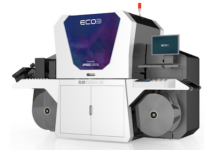
Hybrid digital/flexo configurations reflect this balanced approach. By combining digital inkjet technology with flexographic units or modules, converters can introduce digital capability into their workflows without abandoning their analogue strengths. This allows them to allocate work according to economic suitability rather than losing competitiveness by forcing all jobs through a single production model.
Broader operational factors are also part of the discussion. Skilled labour availability, training demands, and energy considerations have all become more prominent in recent years. Equipment choices are therefore increasingly evaluated not only on output speed, but on stability, ease of use, and long-term operating characteristics.
A similar pattern can be observed in adjacent markets such as textile printing. The adoption of the textile printing machine in digital formats has largely been driven by the need for shorter production cycles and greater customisation. In both textile and label environments, digital capability appears to be valued less as a disruptive force and more as a tool for managing complexity.
It would be overstated to suggest that digital capacity is essential for every converter, as business models, customer bases, and capital priorities differ widely. For some operations, existing analogue infrastructure remains entirely aligned with demand.
However, as label printing industry trends continue to reflect increased variation and responsiveness, increasing your digital capacity may provide an additional pathway for handling jobs that might otherwise strain traditional workflows. In that sense, digital inkjet and hybrid technology are becoming competitive differentiators not because they guarantee superior performance, but because they expand the range of commercially viable production choices available to a converter.
FOCUS LABEL MACHINERY
https://www.focuslabel.com